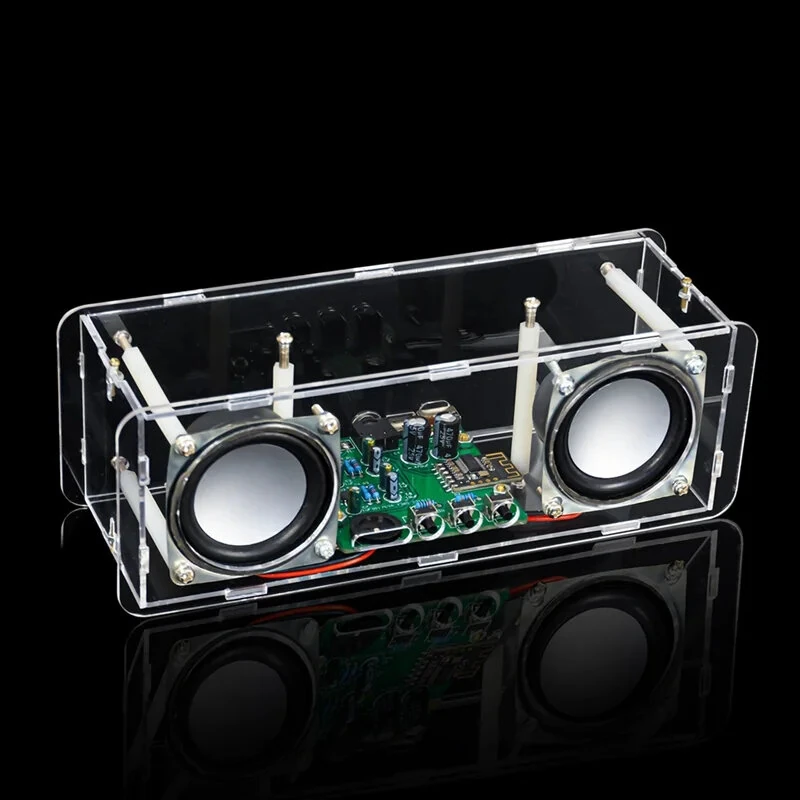

1 / 5 · Click to enlarge
LandaTianrui LDTR-RM021 Passive Buzzer Module for Arduino (Black)
The LandaTianrui LDTR-RM021 Passive Buzzer Module for Arduino (Black) is a value-for-money electronics designed for everyday users. It features One Package Weight: 0.03kgs / 0.07lb and One Package Size: 5.3cm * 5cm * 3.2cm / 2.09inch * 1.97inch * 1.26inch.
Available Offers
Free Delivery on this order. No minimum order value.
15-Day Easy Returns — hassle-free return & full refund.
Secure Payment — 100% safe checkout with UPI, Cards & Net Banking.
Available Offers
5% Cashback
Pay with UPI & get 5% cashback (up to ₹50) via Razorpay
No-Cost EMI
Available on select bank cards at checkout. 0% interest for 3 months.
Free Shipping
Free delivery on all orders. No minimum order value.
Cash on Delivery
COD available on orders up to ₹5,000 across India.
Quick Specs
Ideal For
About This Product
The LandaTianrui LDTR-RM021 Passive Buzzer Module for Arduino (Black) is a value-for-money electronics designed for everyday users. It delivers reliable performance at an accessible price.
Key Specifications
- One Package Weight: 0.03kgs / 0.07lb
- One Package Size: 5.3cm * 5cm * 3.2cm / 2.09inch * 1.97inch * 1.26inch
- Best Sellers Rank (Consumer Electronics): #3779
- Best Sellers Rank (Consumer Electronics > Arduino & SCM Supplies): #161
- Best Sellers Rank (Consumer Electronics > Arduino & SCM Supplies > Other Accessories): #32
Why Buy from Elecvora?
Elecvora sources this product directly, cutting out multiple middlemen. Every order includes free shipping, a 15-day return policy, and secure payment via Razorpay.
Introduction: We can use Arduino to make many interactive works of which the most commonly used is acoustic-optic display. All the previous experiment has something to do with LED. However, the circuit in this experiment can produce sound.Normally, the experiment is done with a buzzer or a speaker while buzzer is simpler and easier to use. The buzzer we introduced here is a passive buzzer. It cannot be actuated by itself, but by external pulse frequencies. Different frequencies produce different sounds. We can use Arduino to code the melody of a song, which is quite fun and simple. Features: 1.Working voltage: DC 3.3V-5V. 2.Interface type: digital. 3.Application: Arduino, 51 singlechip, Raspberry Pi and so on. 4.Come with a light transparent box for easy carry and store. 5.Material: FR4. Packing List: Passive Buzzer Module x 1 Plastic Box x 1